































About River Drift
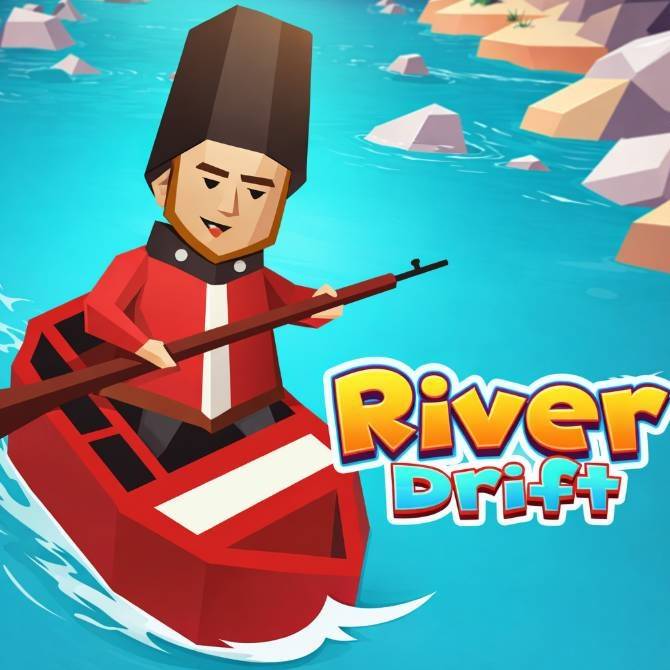
River Drift is a boat racing game through a river full of treacherous bends. Dodge rocks, avoid logs, and collect gems to unlock new boats before the current sweeps you away!
River Drift: Why Your Boat Always Hits Rocks in the Same Place
If you've tried River Drift a few times and noticed you keep hitting rocks at the same bends, the problem isn't usually your hand speed but how you read the river. Here are some tips to help you prolong your journey in the game without needing lightning-fast reflexes.
Don't steer reflexively, steer anticipally
The most common mistake is waiting until you see an obstacle before steering. As it narrows to one side, move your boat in advance rather than waiting for the rocks to become clearly visible before reacting. Speed in this game, that kind of reaction, is always half a beat too slow. Instead, observe the shape of the river ahead; as soon as you see it narrowing to one side, you should move your boat in advance and not wait until the rocks are clearly visible to react.
Keep your boat in the middle of the river when unsure
There's a natural tendency to stay close to the river's edge to easily collect rocks, but that leaves you with no room to maneuver when obstacles suddenly appear there. Unless you can clearly see the path ahead, keeping your boat near the center of the river will give you more options to swerve left or right at the last minute.
Learn to let go; don't try to salvage what you can
Many players attempt to collect the last gem even when the path is clearly dangerous, which reflects a kind of regretful mentality. In reality, that gem isn't worth losing your turn and having to start over. Once you see the gem sandwiched between two obstacles, the wisest course of action is to let it go and focus on keeping your boat safe for the next sections.
Get used to the pace of acceleration in each section
The difficulty in River Drift doesn't increase steadily but usually has periods of intense speed followed by periods of relaxation. If you pay close attention, after a series of consecutive turns, there's usually a break—there's usually a break, enough time to regain your rhythm before the next challenge. Knowing this rhythm helps you allocate your focus more effectively instead of being stressed throughout the entire journey.
Play short but frequent turns instead of grinding through long stretches
Because the river layout is randomly shuffled each turn, playing continuously for tens of minutes won't make you any better than playing a few short turns and then taking a break. Reflexes in this game take time to develop, and the brain usually processes better when resting between turns rather than when forcing yourself to play continuously until your hands ache.
Conclusion
River Drift may seem like a game that only requires quick reflexes, but in reality, most of the longest turns come from players who can anticipate situations and know when to let go. Think of each collision as the river showing you a new type of curve to watch out for, and your record distance will naturally increase over time.